Subterranean and drywood termite remediation addresses two distinct biological threats common to coastal Los Angeles County structures. Drywood termites live entirely within framing timbers, fascia boards, rafters, and…
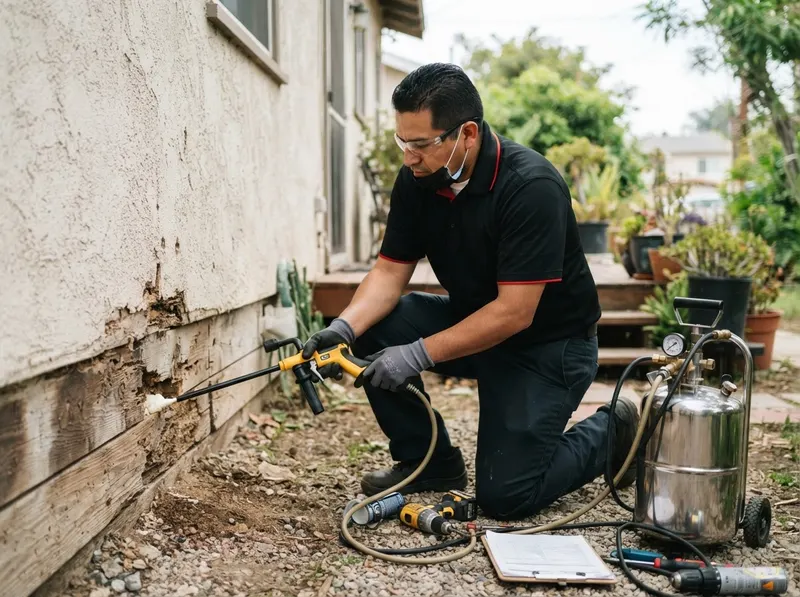
Subterranean and drywood termite remediation addresses two distinct biological threats common to coastal Los Angeles County structures. Drywood termites live entirely within framing timbers, fascia boards, rafters, and exposed hardwood floors, extracting moisture directly from cellulose and leaving small, six-sided fecal pellets (frass) beneath kick-out holes. In older architectural pockets like California Heights and Rose Park, drywood infestations frequently anchor into mature Douglas fir framing. Subterranean termites require continuous soil moisture contact and construct subterranean mud shelter tubes over foundation stem walls, plumbing penetrations, and cripple walls to access above-ground sill plates. In high-water-table areas near Naples, Belmont Shore, and Alamitos Beach, subterranean colonies exploit damp crawlspace soil and micro-fissures in concrete slabs.
Treatment selection depends entirely on the termite species and structural configuration. If an infestation is isolated to drywood colonies within accessible structural framing, such as exposed rafters or door casings, localized low-toxicity foam or precision borate treatments neutralize the active gallery without tenting the residence or requiring off-site relocation. If drywood colonies extend throughout inaccessible ceiling cavities or double-wall framing, structural whole-structure measures may be evaluated. When Western subterranean termites are identified, remediation shifts from the wood to the soil: crews dig trench barriers measuring 6 inches wide by 6 inches deep around exterior stem walls and drill access ports spaced 12 inches apart through interior slab penetrations to inject non-repellent termiticide barriers. This treatment prevents soil-dwelling workers from returning to structural wood framing, halting structural damage.
Homeowners in Bixby Knolls, Los Altos, and El Dorado Park Estates often mistake winged reproductive termite swarmers for carpenter ants during late-summer heat waves. Subterranean swarmers emerge during warm daylight hours following early seasonal rain, while drywood swarmers fly during late-summer coastal humidity spikes. Termite swarmers have straight, beaded antennae, broad waists, and two pairs of equal-length translucent wings, whereas ants exhibit pinched waists and elbowed antennae. Accurate identification prevents unnecessary full-structure interventions when a targeted soil or localized wood treatment achieves complete eradication without lingering chemical odors or open-ended monthly service commitments.
Every job gets a firm, written price after a free on-site visit.
Tell us about your subterranean and drywood termite remediation job in Long Beach and we'll send a clear, written quote, usually the same day.
 Crossroad Pest Control