Structural pest remediation in attic spaces addresses the biological residue left by roof rats, raccoons, or squirrels after structural entry points are breached. In coastal cities like Long Beach, elevated relative…
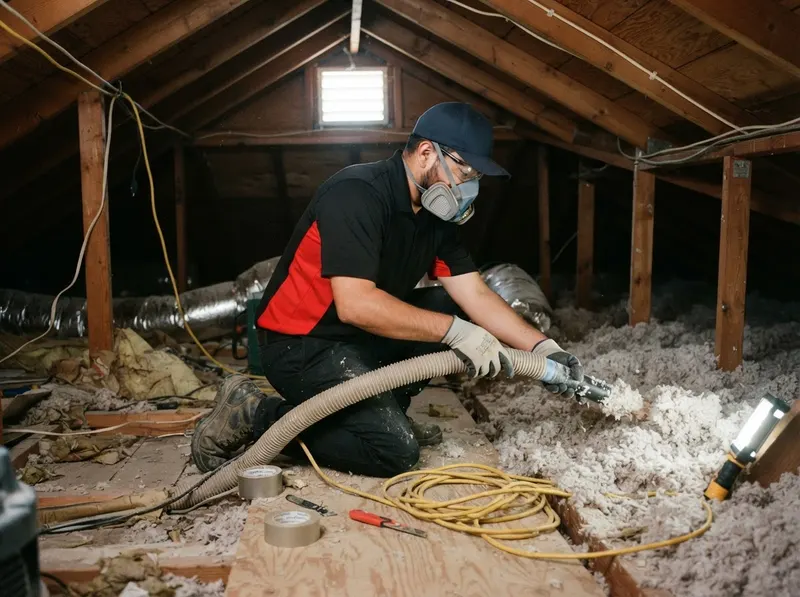
Structural pest remediation in attic spaces addresses the biological residue left by roof rats, raccoons, or squirrels after structural entry points are breached. In coastal cities like Long Beach, elevated relative humidity interacts with rodent urine and droppings trapped inside fiberglass insulation, producing airborne ammoniacal gases and allowing bacterial colonies to migrate through ceiling bypasses into occupied rooms below. Removing soiled materials resolves the distinct, persistent odor that permeates living quarters while halting the secondary emergence of carpet beetles and rodent mites. When choosing attic remediation, simple spot-cleaning fails if rodents have tunneled through more than 25% of the surface area, because pheromone trails remain embedded in joist wood and continue attracting new harborages from nearby utility wires and palm canopies. Full decontamination replaces compressed, contaminated fiberglass with pest-treated blown-in insulation, delivering structural safety alongside steady energy efficiency without chemical odor lingering in living spaces.
Local housing stock across Los Angeles County requires exact structural adaptations during attic cleanouts. In California Heights and Rose Park, early-twentieth-century Craftsman bungalows and Spanish Revival properties frequently possess open knob-and-tube wiring pathways, low attic clearance, and nominal 2x4 framing, requiring delicate manual extraction through tight hallway scuttles without stressing lath-and-plaster ceilings. Conversely, mid-century ranches in El Dorado Park Estates and Los Altos feature broader truss networks where blown cellulose has settled over 50 years to an inadequate thermal resistance rating below R-19. Marine layer exposure throughout Belmont Shore and Naples accelerates moisture accumulation on contaminated batts, dropping thermal efficiency and spreading fungal spores through can lights and bathroom exhaust penetrations. Modern restoration brings attic floor insulation to California Title 24 standards (R-38), stopping radiant heat absorption from direct roof exposure while sealing home air loops.
Technicians carry out containment by sealing hallway scuttle doors with heavy-gauge polyethylene sheeting and operating commercial negative-air machines fitted with 99.97% efficient HEPA filters, ensuring no disturbed particulate enters bedrooms or hallways. Step 1: Technicians extract all damaged batting and loose-fill insulation through an external commercial-grade vacuum hose routed directly to an outdoor disposal truck. Step 2: Mechanical HEPA vacuuming sweeps the exposed joists and top plates to capture rodent droppings and desquamated insect fragments. Step 3: An atomized, non-staining botanical disinfectant treats bare wood substrates to neutralize bacteria, zoonotic hantavirus particles, and territorial pheromones without releasing harsh synthetic vapors into living areas. Step 4: Technicians install rodent-proof copper mesh, metal flashing, and expanding foam around plumbing vents, electrical penetrations, and gable louvers. Step 5: Technicians blow fresh, clean insulation across the entire floor deck to an exact depth of 12 to 14 inches to establish a continuous thermal barrier.
Every job gets a firm, written price after a free on-site visit.
Tell us about your attic decontamination and thermal insulation replacement job in Long Beach and we'll send a clear, written quote, usually the same day.
 Crossroad Pest Control