Stinging insect activity in coastal Los Angeles County surges from April through October, as sustained maritime warmth encourages rapid colony expansion. In older Long Beach architectural styles, such as the exposed…
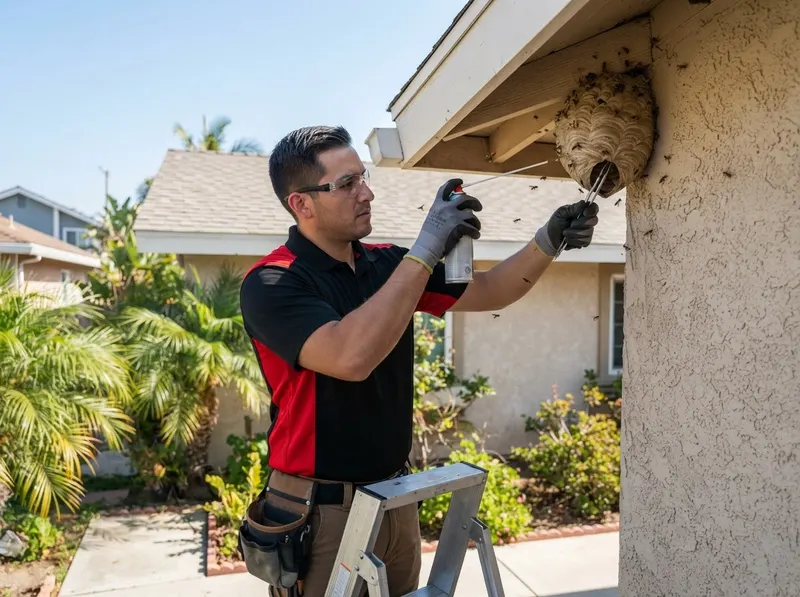
Stinging insect activity in coastal Los Angeles County surges from April through October, as sustained maritime warmth encourages rapid colony expansion. In older Long Beach architectural styles, such as the exposed rafter tails of California Heights Craftsman homes or the deep stucco overhangs in Belmont Shore and Naples, paper wasps and aerial hornets construct structural colonies directly above entry doors, patios, and second-story window ledges. When foraging vectors settle near living spaces, stinging hazards multiply for children and pets, converting outdoor yards into zones of acute domestic vulnerability. Ground-nesting yellowjackets frequently take over abandoned rodent burrows around perimeter landscaping in El Dorado Park Estates and Los Altos, creating hidden subterranean nests that erupt when disturbed by foot traffic or routine lawn maintenance.
Decision fit depends entirely on nest placement and structural accessibility. An exposed umbrella-shaped paper wasp comb under a single-story patio cover represents a direct chemical knockdown and physical removal scenario, requiring a single focused visit. Conversely, void infestations, where yellowjackets establish colonies within exterior wall cavities, weep holes, or beneath barrel roof tiles, require specialized aerosol micro-injections combined with dust formulations to extinguish the brood before sealing the ingress point. Homeowners facing ground nests or high-elevation dormer nests benefit from pressurized pole delivery systems that neutralize aggressive guard insects without broadcasting drift across coastal garden beds. For structural wall voids, DIY exterior spraying frequently drives agitated workers deeper into the home's interior sheetrock, making targeted perimeter containment the standard defensive procedure.
The trade-off between isolated spot removal and perimeter barrier defense involves ongoing site pressure. Removing a single visible nest eliminates immediate defensive stings, yet lingering pheromone markers along warm fascia boards often invite secondary queens to rebuild within 30 days. Applying localized botanical or microencapsulated repellent compounds directly to the attachment substrate breaks this cycle without generating offensive chemical odors indoors. Properties adjacent to natural water features or greenbelts, such as the Los Cerritos channel, Naples canals, or El Dorado Nature Center, experience elevated flying insect populations year-round, requiring systematic eaves-and-overhang treatments rather than reactive surface knockdowns.
Every job gets a firm, written price after a free on-site visit.
Tell us about your exterior stinging insect and wasp nest removal job in Long Beach and we'll send a clear, written quote, usually the same day.
 Crossroad Pest Control